How to Transcribe Overlapping Voices in a TikTok Video
By TranscriptNest · Published 2026-11-03
Keep each voice on its own line and mark the overlap
When two people speak at the same time in a TikTok clip, do not combine their words into one sentence. Preserve each audible contribution on a separate, consistently labeled line, and add a clear overlap note where the voices collide. The Smithsonian Transcription Center advises transcribers to capture overlapping speech as best they can, continue using separate lines and speaker tags, and mark the overlap with its project notation, [[cross talk]]. That is one documented house style, not a universal TikTok format. If a word is masked, mark it as unclear instead of filling it in from context.
First separate an interruption from simultaneous speech
An interruption can happen in sequence: one person stops, and another begins. Overlap means both voices are audible at once. Listen to the short passage again before choosing a notation. If the first speaker trails off as the second starts, keep the first speaker's unfinished words and show the interruption using the convention selected for your transcript. If the voices continue together, label that interval as overlap. The Smithsonian guide uses an em dash for a sentence cut off or interrupted and a separate cross-talk marker for simultaneous speech; its choices illustrate why these two events should not be collapsed into the same mark.
Use a small, consistent speaker key
Before editing the whole transcript, decide how you will identify the voices. Use known names only when you can verify who is speaking. Otherwise choose neutral labels such as Speaker 1 and Speaker 2, then keep those labels stable through the clip. A short key can say “Speaker 1 = voice first heard; Speaker 2 = second distinct voice.” This is an editorial convention for the copy you are preparing, not a claim that an automated transcript identified the speakers. Do not infer identity from accent, appearance, or a guess about who would say the line.
Worked example: keep two clear phrases separate
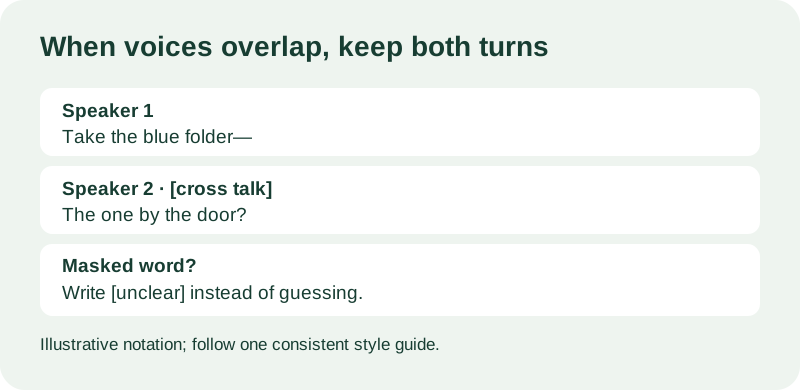
Invented example, not audio from a real TikTok: Speaker 1 says, “Take the blue folder—” while Speaker 2 says, “The one by the door?” at the same time. A readable edited transcript could be: “Speaker 1: Take the blue folder— [cross talk]” followed by “Speaker 2: The one by the door?” The exact placement of a marker depends on the house style; the useful information is that the lines overlap. Do not rearrange the words into a clean call-and-response if the recording has both voices at once.
Worked example: leave the masked word unresolved
Invented example: Speaker 1 says, “Put it beside the—” while Speaker 2 begins, “No, keep it—”. If the last word of each voice cannot be distinguished, write only the words you can hear and put a consistent uncertainty marker in the remaining spot, such as “[unclear]”. Do not use the surrounding sentence to invent “window” or “shelf.” Keep a private note of the time range you replayed so you or another reviewer can return to the same moment. A plausible sentence is not evidence that those words were spoken.
A practical overlap-review pass
Make one pass for speaker order, then a second pass only over the overlap. On the second pass, note the start and end of the collision in your own working copy, listen for each voice separately, and retain only words you can distinguish. Keep the overlap label even when both lines are legible; it tells a reader that the voices were simultaneous. If one speaker is not identifiable, use a neutral unknown-speaker label rather than assigning a name. Keep an untouched transcript beside the reviewed copy so a later edit can be checked and reversed.
Does an automatic TikTok transcript separate speakers?
Do not assume that plain transcript text contains reliable speaker separation. TranscriptNest's upload tool returns text for a file; this guide does not claim that it diarizes voices or marks cross talk automatically. Review the recording yourself before publishing a quotation, captions, or a transcript that depends on who said each line. The Smithsonian conventions cited here are useful examples for editing, but they are not TikTok's rules and should not be described as an official platform format.
Should I guess a word when one voice covers another?
No. Keep the clear words, mark the uncertain portion consistently, and preserve the overlap context. Nearby words can suggest what might fit, but only a careful listen can support adding a word to a transcript. If the passage remains unclear, leave it unresolved or ask a second listener to review the same time range.